Dance
🎬 Watch videos📂 Browse
Dance Board


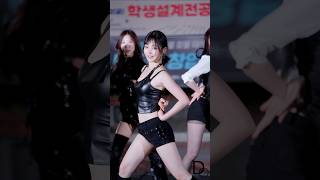
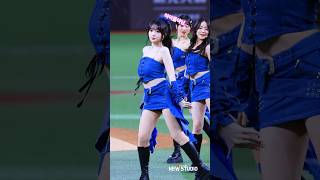
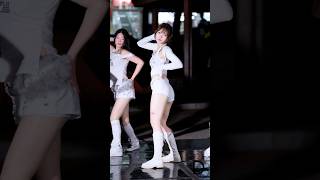
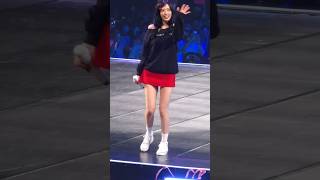
Dance — A place to re-examine a single stage from multiple angles
Even the same stage becomes a completely different video depending on where you view it from. Music show cameras show the overall picture of the song, while fancams follow only one person's movement and expression. Festival stages capture the cheers and lights of the audience, and cover dances translate the original choreography to different bodies. Kadeora collects these angles by dividing them into categories. When you miss your favorite group's comeback stage, want to see only a specific member's fancam, or are looking for cover videos to learn choreography, the entrance to each is different.
This page is where those doors are guided. You can choose what you need from the axes below.
1. How it is divided by axes
| Axis | What's available | When to use it |
|---|---|---|
| Girl Group | Stages and activities by group/member | When you want to binge-watch a specific group's comeback stages |
| Boy Group | Boy group stages | When you're looking for male idol performances |
| Fancam | Fixed camera following only one member | When you want to see choreography details, expressions, or movement |
| Dance Cover | Videos covering the original choreography | When you want to learn choreography or see different interpretations |
| Cheer | Cheerleading and cheering performances | When you're looking for performances at sports events |
| Hongdae Busking | Street performance stages | When you want to see raw performances outside the stage |
| Meme | Catchphrases, challenges, short clips | When you're curious about what's trending now |
| MBTI | Content by personality type | When you want to choose and watch something light-hearted |
2. Why fancams are separate
Fancams do what broadcast cameras don't. Broadcast editing captures the center during the chorus, shows the full formation during the bridge, and close-ups on faces during highlights. While well-produced videos, you can never know what one person did for 4 minutes as a result.
Fancams are the opposite. The camera follows only one person. This captures expressions from sections cut in broadcast, movement paths when formations change, and moments of catching breath just before the chorus. For those learning choreography, fancams are practically a textbook, and for fans, they are the 4 minutes broadcast didn't show. This is why Fancams are separated on Kadeora.
3. How to watch differs by type of stage
Even for the same song, different stage characteristics result in completely different videos.
- Music Show Stage: Controlled environment for lighting, cameras, and sound. Choreography formations and movements are seen most clearly. Outfits and sets change each comeback week, so the same song looks different even when watched multiple times.
- Festival/Outdoor Stage: Audience reactions are captured along with it. Even if the sound quality is rough, the on-site energy comes through as is.
- Water Festival Stage: The conditions of water cannons and a wet stage change the performance itself. Limited to summer. They are collected separately on the Waterbomb Stage.
- Street Performance: No stage equipment, and the distance to the audience is a few meters. Can be seen in Hongdae Busking.
4. Go to group pages now
The girl group axis has pages for the following teams. Each page includes a group introduction and recent stage videos.
| Group | Group | Group |
|---|---|---|
| aespa | IVE | LE SSERAFIM |
| NMIXX | ILLIT | STAYC |
| BABYMONSTER | tripleS | fromis_9 |
| Hearts2Hearts | Rescene | kiiikiii |
| BLACKPINK | (G)I-DLE | — |
Individual member pages are also under the groups. For example, it's possible to only view fancams and stages of a specific member, such as Karina.
5. What's different about dance covers
A dance cover is when someone else re-dances the choreography of an original song. It's not just imitation, but interpretation. Even the same choreography gives a completely different impression depending on the number of people, physique, camera position, and filming location. A video filmed in front of a practice room mirror and a video filmed in the middle of a city center are closer to different genres, even if it's the same song.
If you watch the original stage and a cover side-by-side, it reveals which parts of the choreography are difficult. There are sections that most covers gloss over, and those sections determine the difficulty of the choreography. Compare them on Dance Cover.
6. Memes and Challenges — Why choreography has shortened
Nowadays, choreography always includes sections that work even when cut short. They are designed so that if you take 4-8 seconds from the chorus and only follow that, you can still recognize the song. This section becomes a challenge, and the challenge becomes a meme. Even people who haven't heard the whole song know those 8 seconds.
So, when watching choreography, it's fun to look for "which section is for a challenge." They are usually the simplest, focus on upper body movements, and are good for filming from the front. This year's trends are summarized in Meme.
7. Frequently Asked Questions
Are fancams and fullcams (entire fancams) different? A fancam focuses on one member, while a fullcam captures the entire group from a fixed angle. To learn choreography formations, fullcams are better; to see individual movements, fancams are preferable.
What videos should I watch first to learn choreography? If recommending an order: ① grasp the overall picture of the song and formation with music show stages, ② follow one person's movements with fancams, and ③ check how the same movements appear on other people's bodies with cover videos – this method is efficient.
The choreography for the same song is slightly different for each stage. It's common for adjustments to be made depending on the broadcast stage size, camera movement, and condition. In particular, formation movement sections often change.
8. Summary
Kadeora is a place that allows you to re-examine a single stage from multiple angles. If you need the overall picture, watch stage videos on the group page; if you want to see only one person, watch a fancam; and if you want to learn it physically, watch dance covers. In summer, seasonal limited stages like Waterbomb Stages appear separately, and trending challenges can be checked in Meme.
If you don't know where to start, choosing a familiar team from Girl Group is the quickest way.
🗺 Map
Today's Videos
News






Recommended Videos
News