Cover Dance
🎬 Watch videos📂 Browse
Cover Dance Board
![[ KPOP IN PUBLIC/ONE TAKE ]YENA(최예나) - '캐치 캐치(Catch Catch)' DANCE COVER by WINKING](https://img.youtube.com/vi/4ugGN0eaVEg/mqdefault.jpg)
![[Busking here?] KiiiKiii - DANCING ALONE | Dance Cover @Sinchon Star Square](https://img.youtube.com/vi/-7zwZha3FWY/mqdefault.jpg)
![[Busking Here?] ARTBEAT YUNA [NewJeans | Attention] Cheonggye Plaza Busking 250511](https://img.youtube.com/vi/DmG0DM1bnwc/mqdefault.jpg)


![260521 Park Jimin Dance Club ABLE - 404 (New Era) KiiiKiii Cover | Vertical Fancam | Cheongju University Uam Daedongje Club Song Festival [KPOP FanCam 4K]](https://img.youtube.com/vi/KzuCFCy0_bQ/mqdefault.jpg)
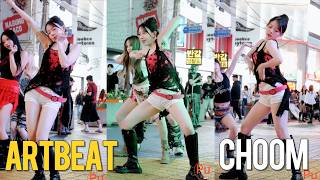
Cover Dance — Moving Someone Else's Choreography to Your Body
Cover dance is not simply imitation. When different people dance the same choreography, it becomes a different dance. The number of people is different, their heights are different, the size of the practice room is different, and the camera's position is different. If the original stage performance is a finished product, a cover is an interpretation.
And cover dance is currently the world's largest K-pop participatory culture. When a song becomes a hit, cover videos appear from dozens of countries within days. This site collects these videos, divided into three axes: songs, crews, and competitions.
1. The Three Axes
| Axis | What's here | When to use it |
|---|---|---|
| Cover by Song | A collection of videos where multiple teams cover one song | When you want to see various interpretations of a specific song's choreography |
| Cover Dance Crews | Pages for cover dance teams worldwide | When you want to watch a collection of videos from your favorite team |
| Competition & Event News | Competition schedule, results, and preliminary information | When looking for a competition to participate in |
2. Song Axis — Same Choreography, Different Bodies
Song pages collect cover videos for a single song. When placed side-by-side, it reveals where the difficulty of that choreography lies. There are sections that most covers gloss over, and those sections are the core of the original choreography.
| Song Page | What to watch for |
|---|---|
| APT. | Why simple movements are difficult |
| How Sweet | How to push the body on the rhythm |
| Magnetic | The design of short challenge sections |
| Whiplash | Formation changes and camera work |
| Supernova | Pauses in movement and afterimages |
3. Crew Axis — Each Team Has Its Own Color
Even when covering the same song, each team produces a different result. The composition of members, filming location, and editing habits become the team's signature.
| Crew | Characteristics |
|---|---|
| Majesty Team | One of the teams with the most accumulated videos |
| 4U Dance Crew | Consistent cover uploads |
| ARTBEAT | Street-based performances |
Videos filmed on the street and videos filmed in front of a practice room mirror are closer to different genres, even if they are for the same song. Off-stage covers can be seen in Hongdae busking, and the nuances of the international scene can be found in Taiwanese cover dance.
4. Competition Axis — Between Hobby and Career
Cover dance actually has a stage. The K-Pop Cover Dance Festival, hosted by Korean Cultural Centers around the world and The Seoul Shinmun, follows a structure of online video submission → national online preliminaries → national finals (live) → Seoul World Finals.
For 2026, the U.S. finals already concluded on May 23 at LA LIVE, and the Canadian finals on May 31 at Vancouver Orpheum, while the Hong Kong finals will be held on August 1. The first-place team from each national final advances to the World Finals held in Seoul in the fall.
Detailed schedules and participation methods are organized in Competition & Event News and 2026 K-Pop Cover Dance Festival.
5. If You're Starting Out — How to Choose a Song
A common mistake when choosing your first cover is picking your absolute favorite song. Favorite songs are usually difficult.
- First, consider the number of people. If two people dance a five-person choreography, the formation breaks down. Choose a song that matches your group size or is less dependent on the number of members.
- Check for floor work. Choreography involving knee work greatly limits filming locations.
- Start with the challenge section. Modern songs invariably have a 4-8 second section that works even when cut short. Uploading just this section before completing the entire song is a common starting point.
- Watch the original fancams. Broadcast cameras often cut out large formation movements. Videos that follow only one person are the real guides.
6. Filming — Angle Before Skill
Even with the same skill level, the perceived quality can vary depending on the camera's position.
- Frontal, chest height. Shooting from above shortens legs and collapses formations.
- Distance for a full-body shot. If your feet are cut off, your steps disappear.
- Stationary. A handheld camera shakes the rhythm of the choreography.
- One take. Covers stitched together with edits are noticeable.
7. Frequently Asked Questions
Are cover dance and challenge different? A challenge involves following a short section of a song (usually within 10 seconds), while a cover dance performs the entire choreography or a significant portion of it. A challenge is like an entrance, and a cover is closer to the main act.
Do I need a team to participate in competitions? It varies by competition. Many competitions require team video submissions, but some also have solo categories. Check Competition & Event News for details.
Which song is covered the most? There is no single authoritative statistic that counts the "most covered song." Rankings vary greatly by platform. Instead, you can get a rough idea of the scale by looking at the actual number of accumulated videos on the song pages.
Can I not do it if I don't have a practice room? Covers filmed on streets, in parks, or in parking lots are often seen even more frequently. What's important is not the space, but the camera position and the condition of the ground.
8. Summary
Cover dance is the act of moving the original choreography to a different body, and in that process, the hidden difficulties of the original song are revealed. This site categorizes it into three axes: songs, crews, and competitions.
Those looking to start should choose a danceable song rather than their favorite one, and it's faster to film the challenge section first instead of the entire song. Eventually, they'll see competition announcements, and the teams actually performing on stage in Hong Kong in August and Seoul in the fall started that way.
🗺 Map
Today's Videos
News![[K-POP IN PUBLIC | ONE TAKE] KATSEYE "ANIMAL'' Dance Cover by 1119 SIGMA | KITE | MALAYSIA](https://i.ytimg.com/vi/EMTfYnSxr2M/hqdefault.jpg)
![[4X4] (G)IDLE - HWAA I Choreography Dance Cover [ 4X4CREW BUSKING 'PERFECT SYNC' ]](https://i.ytimg.com/vi/3xjqOHnk_KI/hqdefault.jpg)
![[KPOP IN PUBLIC | ONE TAKE] KISS OF LIFE 'Sweat' Dance Cover by ONESHOT CREW | Dance Cover](https://i.ytimg.com/vi/49X7ZmDIKYc/hqdefault.jpg)


![[4X4] RESCENE - PRETTY GIRL I Choreography DANCE COVER [ 4X4CREW BUSKING 'PERFECT SYNC' ]](https://i.ytimg.com/vi/BHtqVxyXoqY/hqdefault.jpg)

![Dance Team MYDAY Suhyun | MYDAY SUHYEON 260906 Hongdae Busking Fancam [Sweat/Abracadabra/Who Is She/Odd]](https://i.ytimg.com/vi/ODdeCTMm2DI/hqdefault.jpg)


Recommended Videos
News
![[BEOUR New Member, 19-year-old Maknae] BEOUR CREW BEOUR Yeeun - Sunmi Full Moon @Hongdae Busking (26.09.05)](https://i.ytimg.com/vi/dYhfswBe_Sg/maxresdefault.jpg)
![[4X4] J-hope (BTS) - Killin' It Girl I Choreography Dance Cover DANCE COVER [ 4X4CREW BUSKING 'PERFECT SYNC' ]](https://i.ytimg.com/vi/yBUGHT-aSSI/hqdefault.jpg)
![[KPOP IN PUBLIC NYC | TIMES SQUARE | ONE TAKE] BABYMONSTER - ‘MOON’ | Dance Cover by GRL1S](https://i.ytimg.com/vi/-cSXJfpy558/hqdefault.jpg)
![[K-POP IN PUBLIC | ONE TAKE] APINK - ‘NO NO NO’ | Dance Cover by OnePear | Australia](https://i.ytimg.com/vi/qh9c1gpuZiY/maxresdefault.jpg)
![[KPOP IN PUBLIC | ONE TAKE] STAYC '2 LOVE' Dance Cover by ONESHOT CREW | Cover Dance](https://i.ytimg.com/vi/Tp6uY_8QOgY/hqdefault.jpg)

![[KPOP IN PUBLIC] MEOVV (미야오) - Hit 'Em | HONGDAE ONETAKE | DANBEAT STUDIO](https://i.ytimg.com/vi/a2Nh3e201-s/hqdefault.jpg)
![Hexia Jiwon - UP (KARINA Solo) (aespa) [260726 Hongdae Indoor Performance]](https://i.ytimg.com/vi/XnLxYWi5tMA/maxresdefault.jpg)
![[KPOP IN PUBLIC | TIMES SQUARE] GIRLSET 'CHAT' | DANCE COVER | ONE TAKE](https://i.ytimg.com/vi/CnFyly3OvnM/hqdefault.jpg)
![[ KPOP IN PUBLIC ] P1Harmony - ‘UNIQUE’ | Dance cover By FELINUS_HK](https://i.ytimg.com/vi/snceQ8YoChs/hqdefault.jpg)
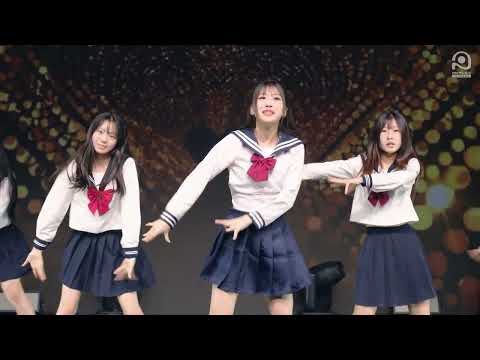

![[4K] KATSEYE 'Animal'🔥 Dance Cover by HISSY @광화문](https://i.ytimg.com/vi/Frl1kwb26Ic/hqdefault.jpg)
![Seomu [ KISS OF LIFE 'SWEAT' ] (20260830) #MemoriesCrew #memoriescrew #KPOP IN PUBLIC #Hongdae #Jjunjaka](https://i.ytimg.com/vi/jDYjnJKTHWM/maxresdefault.jpg)
![[4K] RESCENE 'LOVE ATTACK'💕 Dance Cover by HITOFF @Gwanghwamun](https://i.ytimg.com/vi/B0gX027XeUw/hqdefault.jpg)


![Nicky (Guest)_ DAYOUNG (다영) 'body' ] (20260828) #AON1 #에이오엔원 #홍대버스킹 #쭌자카](https://i.ytimg.com/vi/FT4iakUVJfA/maxresdefault.jpg)
![Yoona [KiiiKiii (Kiki) 'Pop Off Pop Off' + Rehearsal] (20260827) #Artbeat #ARTBEAT #Here? #KPOP IN PUBLIC #Hongdae #Junjaka](https://i.ytimg.com/vi/R78XLWNht74/hqdefault.jpg)
![[Is it here?] Kiki KiiiKiii - Pop Off Pop Off | Dance Cover @Hongdae](https://i.ytimg.com/vi/Cu_8zD3SlG4/hqdefault.jpg)


![[KPOP IN PUBLIC | ONE TAKE] RESCENE - LOVE ATTACK | Dance cover by INSOMNI](https://i.ytimg.com/vi/Pa7r6fEIIqQ/hqdefault.jpg)
![[4X4] fromis_9 - Vitamin ME | Choreography Dance Cover DANCE COVER [ 4X4CREW BUSKING 'PERFECT SYNC' ]](https://i.ytimg.com/vi/jVQaMytOlJA/hqdefault.jpg)