Boseong Green Tea Fields
🎬 Watch videosBoseong Green Tea Fields Board
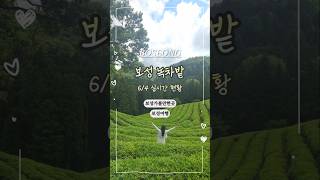
![[4K] A Journey to the Green Land_Boseong Green Tea Fields (Daehan Dawon, Tea Field Observatory, Botjae Rest Area, Goryeohweogwan, Beolgyo's Cockle Restaurant)](https://img.youtube.com/vi/FiFxgMgp4lM/mqdefault.jpg)
![Boseong's BEST3 Restaurants: Eaten More Than Green Tea, Rivaling a Royal Feast -Boseong Edition- | [Rado, I Want to Know That Taste]](https://img.youtube.com/vi/PkkslJowV9g/mqdefault.jpg)
Boseong Green Tea Plantation — Green Stripes Flowing Along the Mountainside
If you've seen the Korean movie <Hulk and Boseong Tea>, you'll know it — this is the overwhelming green landscape you saw. Tea fields, carved out like contour lines along the mountainside, stretch endlessly, guarded by Metasequoia trees lining the paths between them. I've rarely met anyone who regretted visiting Boseong. However, the timing is truly important.
What kind of place is it? — Daehan Dawon
In Boseong, if you say "Let's go to the green tea plantation," 90% of the time, it's Daehan Dawon. Established in 1957, it's Korea's largest green tea farm, spanning about 170,000 pyeong. Although not a UNESCO World Heritage site, it is a top-ranked scenic location for Korean visual content, frequently used for advertisements, dramas, and films. The signature scenery begins with the Metasequoia Path at the entrance.
How to look around
Entrance → Metasequoia Path → Walking path between tea fields → Observatory → Dawon Cafe/Shop.
- Recommended Route — Walk slowly from the entrance to the observatory, taking photos → Green tea latte + green tea ice cream at the cafe → Descend. About 2 hours is appropriate
- To the Observatory 15-20 minutes on foot. Uphill section (not steep, but high heels are not recommended)
- Photo Spots — Entrance to Metasequoia Path, middle of the walking path between tea fields, observatory
How to get there — A car is virtually essential
- KTX: Yongsan Station → Gwangju Songjeong Station approx. 1 hour 30 minutes → Intercity bus (approx. 1 hour) or rental car
- Express Bus: Seoul → Boseong approx. 4-5 hours
- By car from Gwangju: approx. 1 hour
- Strongly recommended to rent a car — A car is overwhelmingly convenient for connecting the routes to Boseong town, tea fields, Yulpo Beach, and nearby facilities.
Season is really important
The landscape of Boseong Tea Plantation varies completely depending on when you visit. Visiting the same place at a different time feels like a different location.
- 🌱 Early to mid-May — New tea harvesting season + peak of fresh greenery. The tea fields are at their greenest and new leaves sprout. The best time of the year. Top recommended season for foreigners
- ☀️ June-August — Deep green. While the greenery is at its peak, midday is hot with little shade.
- 🌅 May Gwangju Boseong Dahyang Festival — Boseong-gun's tea festival period. Rich in tea field events and experiences.
- 🌫 May-June Dawn Fog — A fantastic landscape with fog covering the tea fields. 5-7 AM.
- 🍁 Autumn (October-November) — Contrast of autumn foliage and tea field green. Second recommendation.
- ❄️ Winter (December-February) — The tea plant colors fade slightly to brown, making photos less ideal. If it snows rarely, it's fantastic, but it doesn't snow much in Boseong.
Realistic Conclusion: If possible, go in May. Other times, you can say "I've been to Boseong," but you won't see that scenery.
Food — What to eat in Boseong
- Green Tea Foods — Green tea bibimbap, green tea kalguksu, green tea samgyeopsal (very fragrant), green tea ice cream. Available at Dawon cafe/rest area or Boseong town.
- Beolgyo Cockles — A specialty of Beolgyo, adjacent to Boseong-gun. True cockle + fresh cockle set meal. 7-8 dishes per table.
- Samhap — Fermented skate + aged kimchi + pork. A Jeollado delicacy with strong likes/dislikes.
- Nokdon — Green tea-fed pork. A Boseong specialty.
Good routes to combine
Boseong alone is half a day. Usually combined with surrounding areas for a 1-night, 2-day trip.
- Yulpo Beach + Yulpo Seawater Green Tea Spa — 20-30 minutes by car from the tea fields. Green tea hot springs are a specialty.
- Suncheon Bay Garden — 1 hour by car. Reed fields, migratory birds.
- Beolgyo — 30 minutes by car. Cockle set meal.
- Gwangju Mudeungsan · City Center — 1 hour by car.
Honest Tips
- Weekday mornings are overwhelmingly better. Weekends and holidays see a surge in Korean group tourists.
- Photos of the Metasequoia Path are best taken at the entrance. Inside the tea fields, the curved path in the middle of the walking trail is a photo spot.
- The green tea ice cream is truly rich. Definitely try it once.
- Dawon Admission Fee — Approx. 4,000 won (adult)
- The walking paths between the tea fields are dirt paths — It can be slippery the day after rain.
- Spending 30 minutes to 1 hour at a photo spot is the charm of Boseong. If you rush through, it's just like seeing an ordinary farm.
- Boseong is a small county — Accommodation options are more varied in Boseong town, Gwangju, or Suncheon.
Information
- Admission Fee: Approx. 4,000 won (adult)
- Recommended Time: 2 hours (Dawon only), half-day (Dawon + Boseong town), 1 night (Boseong + Suncheon/Gwangju)
- Hours: 09:00~17:00 (Varies seasonally)
- Official: dhdawon.com (Daehan Dawon)
Summer Guide (July-August 2026)
June to August is when the tea fields are at their deepest green. The stripes of the terraced tea fields are most vivid, and the shade of the cedar path at the entrance is thickest then.
Based on Daehan Dawon, summer (March-October) operating hours are 09:00-18:00, and adult admission is 4,000 won. Allow at least 2 hours to explore the observatory slowly. However, the tea fields are uphill with very little shade. Avoid midday in midsummer and instead recommend 9-11 AM or after 4 PM. A hat and water are not optional but essential.
After rain, there's a high chance of encountering foggy tea fields. If you're aiming for photos, the morning after a rain forecast is your best bet.
Combine with the sea in summer. Yulpo Solbat Beach is a short drive away, and in 2026, it will be open from July 11 to August 23. The standard course for a Boseong summer trip is to relax your body at the adjacent green tea seawater bath (6 AM-8 PM, adult 7,000 won) after swimming. If outdoor plans are disrupted by heatwaves or sudden showers, Beolgyo's Taebaeksanmaek Literary Museum is an indoor alternative (closed Mondays).
You can access it by local bus or taxi from KTX Boseong Station, but since the intervals are long, checking the timetable is essential. If you have your own car, the parking lot is spacious, but it can get full on holiday weekends.
For Foreign Visitors: Major signs along the main paths are translated into English, making navigation easy.
🗺 Map
Today's Videos
News![Boseong's BEST3 Restaurants: Eaten More Than Green Tea, Rivaling a Royal Feast -Boseong Edition- | [Rado, I Want to Know That Taste]](https://i.ytimg.com/vi/PkkslJowV9g/hqdefault.jpg)

![[4K] A Journey to the Green Land_Boseong Green Tea Fields (Daehan Dawon, Tea Field Observatory, Botjae Rest Area, Goryeohweogwan, Beolgyo's Cockle Restaurant)](https://i.ytimg.com/vi/FiFxgMgp4lM/hqdefault.jpg)